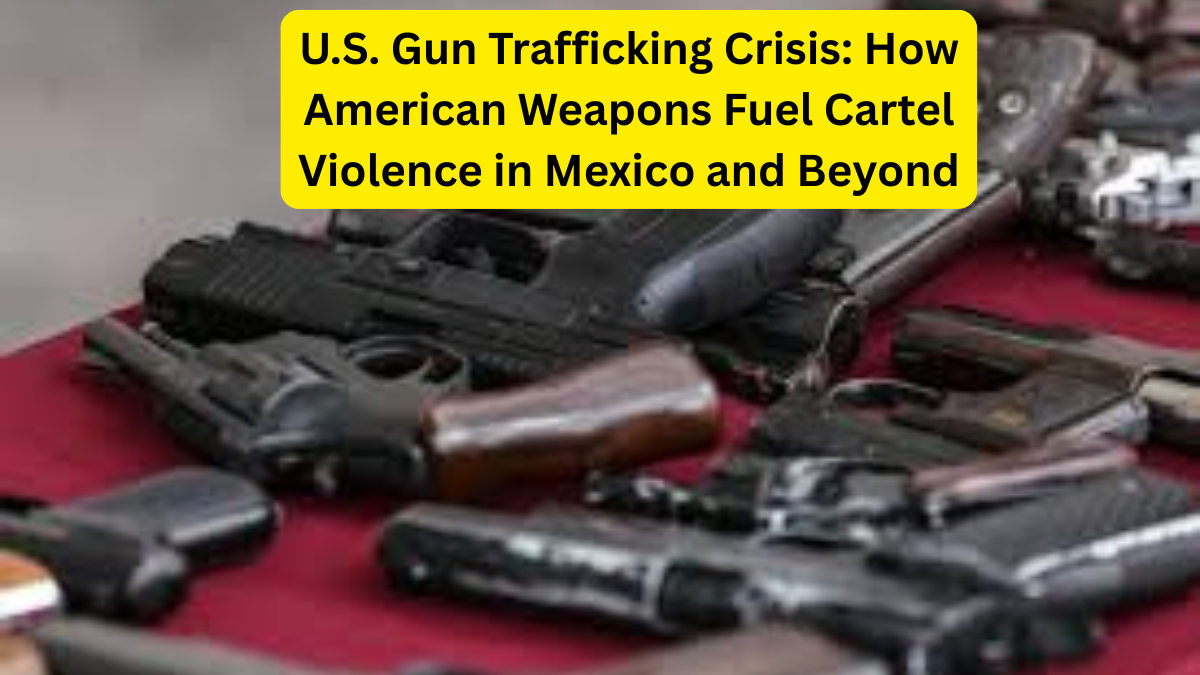
U.S. Gun Trafficking Crisis: How American Weapons Fuel Cartel Violence in Mexico and Beyond
The Staggering Scale of Cross-Border Gun Trafficking
Recent data reveals a disturbing reality: the United States has become the primary source of illegal firearms fueling violence throughout Mexico and the Caribbean. According to Mexico’s Security Ministry, 70% of illegal guns seized in Mexico originated in American gun shops, supplied by U.S. manufacturers. Current estimates suggest between 250,000 to 500,000 firearms are illegally trafficked across the U.S.-Mexico border each year, creating what authorities describe as a “crime gun pipeline” that empowers drug cartels and criminal organizations.
The consequences of this trafficking are measurable in human lives. With Mexico seizing over 17,000 illegal firearms in the past year alone—a rate double that of the previous administration—the connection between American-sourced weapons and rising homicide rates in neighboring countries has become undeniable.
Mexico’s Legal Battle Against U.S. Gun Manufacturers
The Landmark Lawsuit That Made History
In 2021, the Mexican government took unprecedented legal action, filing suit against eight major U.S. gun manufacturers, including industry giants Smith & Wesson. The lawsuit alleged these companies knowingly supplied firearms through corrupt dealers who funneled weapons to drug cartels, despite warnings from law enforcement and even their own executives.
The legal complaint detailed how manufacturers:
- Targeted distribution through dealers with known trafficking connections
- Ignored internal warnings about suspicious purchasing patterns
- Designed military-style weapons specifically appealing to criminal organizations
- Failed to implement basic safeguards that could disrupt trafficking networks
Supreme Court Intervention and Legal Implications
Although the United States Supreme Court halted Mexico’s lawsuit in summer 2025, citing the Protection of Lawful Commerce in Arms Act (PLCAA), the decision had significant limitations. The Court rejected broader immunity claims from the gun industry and maintained that manufacturers could still face liability under certain conditions, particularly when demonstrating willful negligence.
The narrow ruling has prompted Mexico to pursue alternative legal strategies, including a second lawsuit against five Arizona gun dealers allegedly central to trafficking operations. This case remains active and has entered the discovery phase, potentially establishing new legal precedents for holding the firearms industry accountable.
Diplomatic Recognition and Bilateral Cooperation
A Shift in U.S. Policy Acknowledgment
For years, U.S. officials largely ignored or downplayed America’s role in international gun trafficking. This changed significantly in late September 2025 when Secretary of State Marco Rubio announced a groundbreaking joint U.S.-Mexico initiative focused explicitly on combating cross-border weapons smuggling.
The diplomatic shift represents growing acknowledgment that:
- Gun violence is a transnational crisis affecting both nations
- American-sourced weapons directly enable cartel operations and violence
- Cooperative solutions are necessary to address the supply side of the problem
Legislative Progress: The Bipartisan Safer Communities Act
In 2022, Congress passed the first major federal gun legislation in three decades, which included specific provisions outlawing cross-border gun trafficking. This legislation marked recognition at the highest levels that America bears responsibility for controlling the flow of weapons beyond its borders.
Both the Biden and Trump administrations have since acknowledged U.S. obligations to stem illegal weapons exports, representing rare bipartisan agreement on a firearms-related issue.
The Human Cost: Connecting Weapons to Cartel Violence
The Direct Line Between U.S. Guns and Mexican Homicides
Statistical analysis reveals troubling correlations:
- Regions with highest U.S. gun exports correspond to areas of greatest cartel violence in Mexico
- Weapons tracing data consistently links seized crime guns to American manufacturers
- Cartel arsenals increasingly feature military-grade weapons only available from U.S. sources
Beyond Mexico: Caribbean Implications
The trafficking network extends throughout the region, with American weapons reaching criminal organizations in:
- Haiti, where gang violence has escalated with sophisticated firearms
- Jamaica, experiencing record homicide rates linked to imported weapons
- Dominican Republic, facing increasing challenges from armed criminal groups
Global Recognition and International Pressure
United Nations Human Rights Commission Involvement
In 2023, the UN High Commission on Human Rights issued its first report examining the firearms industry’s role in global violence. The landmark document specifically addressed how lax U.S. gun laws and manufacturing practices contribute to human rights violations internationally.
Inter-American Court of Human Rights Advisory Opinion
Mexico has requested an advisory opinion from the Inter-American Court regarding gun industry accountability under international human rights law. The pending decision could establish new legal frameworks for holding manufacturers responsible for downstream violence enabled by their products.
Regional Solidarity Against Trafficking
Heads of state throughout Latin America and the Caribbean have increasingly united around calls for:
- Stronger U.S. export controls
- Increased transparency in firearms tracking
- International cooperation to disrupt trafficking networks
The Path Forward: Multifaceted Solutions to a Complex Problem
Strengthening Enforcement and Cooperation
Effective solutions require action on multiple fronts:
Enhanced Regulatory Measures:
- Improved background check systems to identify straw purchasers
- Stronger dealer oversight and license revocation for violators
- Real-time reporting of multiple firearm purchases
International Collaboration:
- Joint task forces combining U.S. and Mexican law enforcement
- Intelligence sharing on trafficking routes and methods
- Coordinated prosecution of transnational trafficking networks
Industry Accountability:
- Voluntary reforms by manufacturers to disrupt trafficking
- Independent monitoring of distribution practices
- Civil liability for demonstrable negligence
The Broader Impact on U.S. Domestic Violence
Ironically, measures to combat international trafficking would also address domestic gun violence, as:
- Trafficking networks often supply domestic criminal markets
- Regulatory improvements would benefit U.S. law enforcement
- Reduced cartel power would decrease drug-related violence in American communities
Conclusion: Shared Responsibility for a Shared Crisis
The issue of U.S.-sourced gun trafficking represents a classic case of interconnected fates. As Jonathan Lowy of Global Action on Gun Violence notes, “Mexico’s efforts to reform industry practices will benefit Americans as much as Mexicans.” The statistics tell a clear story: American firearms are fueling violence that spills across borders, creating security crises that ultimately affect the United States itself.
While legal battles continue and diplomatic efforts evolve, several truths remain evident:
- The United States bears significant responsibility for weapons reaching criminal hands internationally
- Mexico’s legal and diplomatic initiatives have forced unprecedented acknowledgment of this reality
- Effective solutions require bilateral cooperation and industry accountability
- Reducing trafficking serves both nations’ interests in creating safer communities
As the second lawsuit against Arizona gun dealers proceeds and international pressure mounts, the coming months may determine whether meaningful progress can be made against a trafficking pipeline that has claimed countless lives on both sides of the border. The challenge remains substantial, but the growing consensus around shared responsibility offers hope for more effective approaches to this transnational crisis.