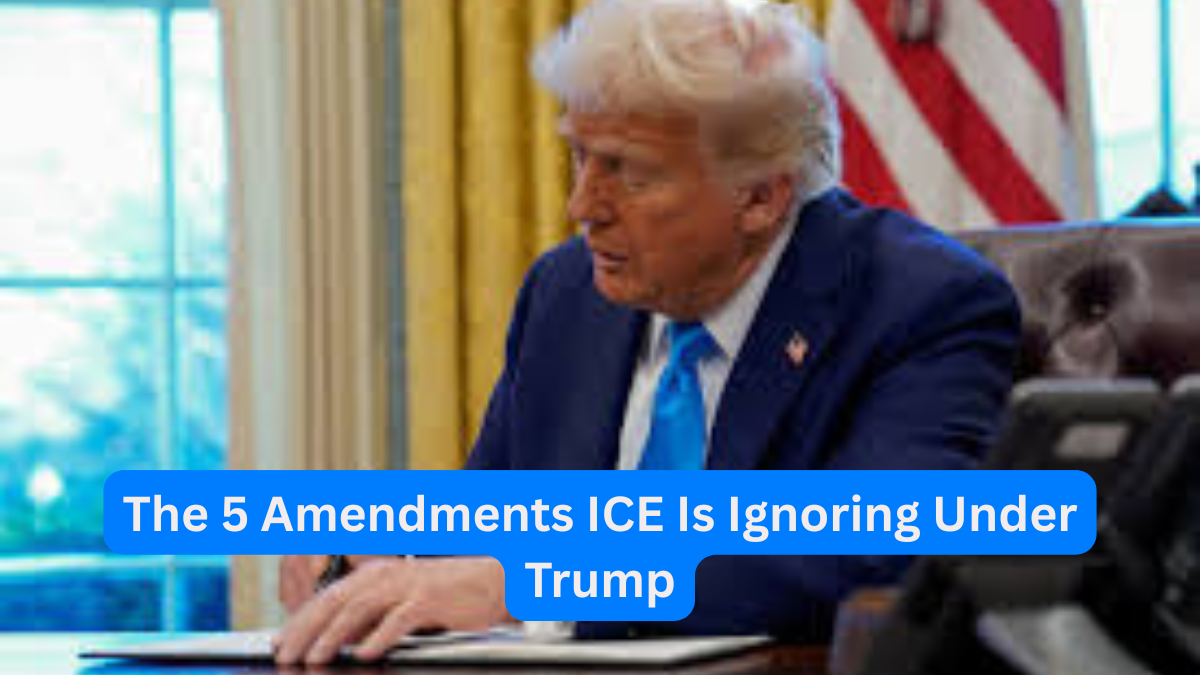
The 5 Amendments ICE Is Ignoring Under Trump: The ongoing federal immigration enforcement operation in Minnesota, dubbed “Operation Metro Surge,” represents a severe and systemic assault on fundamental constitutional rights. Under the Trump administration, Immigration and Customs Enforcement (ICE) and Customs and Border Protection (CBP) have engaged in tactics that blatantly disregard the First, Fourth, Fifth, Tenth, and Fourteenth Amendments. This article provides a detailed analysis of these constitutional violations in Minnesota, outlines the legal context, and offers citizens actionable steps to document abuses and seek recourse.
The Legal Onslaught: How Federal Operations Override State Sovereignty and Civil Liberties
The siege in Minneapolis and St. Paul is not merely a law enforcement operation; it is a constitutional crisis playing out in real time. Federal lawsuits filed by the state of Minnesota and its cities argue that Operation Metro Surge is an illegal overreach designed to punish political adversaries and coerce state cooperation, violating the foundational principle of federalism.
The Core Constitutional Framework Under Attack
The United States Constitution establishes a balance of power and a suite of individual protections. The current situation in Minnesota demonstrates a collapse of that balance:
- Federalism (10th Amendment): Powers not delegated to the federal government are reserved for the states. The federal occupation of a metropolitan area to force policy change is an existential threat to this structure.
- Individual Liberties (Bill of Rights): The First, Fourth, and Fifth Amendments create zones of free expression, privacy, and due process that are being actively violated.
- Equal Protection (14th Amendment): Guarantees that all persons, regardless of race or immigration status, receive equal protection under the law—a principle undermined by racially targeted enforcement.
A Detailed Breakdown of the Five Violated Amendments
Understanding each violation is key to recognizing the scope of the crisis and the legal arguments being made in federal court.
1. The First Amendment: Suppression of Speech, Assembly, and Press
The First Amendment guarantees the right to free speech, peaceful assembly, and to petition the government for redress. ICE operations in Minnesota have systematically targeted these rights.
Retaliation Against Protesters and Observers
Federal judges have already found likely First Amendment violations. Tactics include:
- Arrests and Detention for Observation: Individuals merely filming ICE actions have been arrested, a clear act of retaliation for protected activity.
- Weaponized Chemical Agents: Pepper spray has been deployed directly at non-threatening bystanders and observers standing on roadsides, with the apparent intent to chill free speech.
- Official Retaliation: Reports indicate privileges like TSA PreCheck have been revoked, and businesses have been audited following criticism of ICE, constituting punishment for protected speech.
Political Retaliation Against a State
Lawsuits cite President Trump’s own statements suggesting the operation is retaliation against Minnesota for voting against him. Targeting a state’s population for its collective political choices is a profound violation of the First Amendment’s spirit and legal precedents.
2. The Fourth Amendment: Erosion of Privacy and Freedom from Unreasonable Seizure
The Fourth Amendment protects against unreasonable searches and seizures and requires warrants based on probable cause. It is being violated on multiple fronts.
Unlawful Home Invasions and Warrantless Raids
- Breaking and Entering: ICE agents have broken down doors of homes without judicial warrants to arrest individuals, later releasing them when citizenship was confirmed—a textbook unreasonable seizure.
- Secret Policies: A leaked DHS memo has reportedly instructed agents they can enter homes without warrants, directly contravening Supreme Court precedent.
Unreasonable Traffic Stops and “Kavanaugh Stops”
- Pretextual Stops: Vehicles have been stopped solely for observing ICE, a practice a federal judge found likely unconstitutional.
- Racial Profiling: So-called “Kavanaugh Stops,” based on race or ethnicity, are rampant. Non-white residents, including off-duty police officers, report being detained without cause, creating a climate of fear.
Excessive and Deadly Force
The violent tactics—smashing car windows, kneeling on necks, and use of deadly force against unarmed citizens like Renée Good and Alex Pretti—constitute excessive force under the Fourth Amendment. Each violent seizure must be proportionate to a legitimate law enforcement need, a standard clearly breached.
3. The Fifth Amendment: Denial of Due Process and Equal Protection
The Fifth Amendment ensures no person is deprived of life, liberty, or property without due process of law. Its “equal protection” component, applied to the federal government, is also under attack.
- Deprivation of Liberty: Dragging citizens from their homes without cause or process violates core due process rights.
- Equal Protection Violations: The racially discriminatory nature of the enforcement actions subjects non-white residents to unequal treatment under the law, violating the Fifth Amendment’s guarantee.
4. The Tenth Amendment: Federal Overreach and Coercion of State Government
The Tenth Amendment reserves non-delegated powers to the states. Minnesota’s lawsuit posits that Operation Metro Surge is an unconstitutional attempt to commandeer state machinery.
- Coercive Federal Invasion: The argument states the federal government has invaded to force Minnesota to surrender state voter data and compel cooperation with federal immigration enforcement—powers not granted to the federal government.
- Bargaining with Sovereignty: A letter from the Attorney General offering to end the operation in exchange for voter rolls underscores the coercive, politically motivated nature of the siege, threatening state sovereignty.
5. The Fourteenth Amendment: Equal Protection and the Right to Security
While originally applied to states, the Fourteenth Amendment’s principles bind the federal government. Its promise of “equal protection of the laws” is critical.
- State-Sponsored Violence: The amendment was drafted to combat state violence against Black citizens. Its core lesson—that physical security is a prerequisite for liberty—is ignored as ICE terrorizes communities of color.
- Equal Sovereignty Doctrine: Minnesota’s lawsuit also invokes the “equal sovereignty” principle, arguing the state is being targeted for political reasons, denied the equal dignity and autonomy guaranteed to all states.
Step-by-Step Guide: How to Document and Report Constitutional Violations
If you witness or experience rights violations, systematic documentation is crucial for legal challenges and accountability.
- Prioritize Safety: Do not physically intervene. Document from a safe distance.
- Record Methodically:
- Video: Record horizontally. State the date, time, and location aloud.
- Details: Note officer badges (if visible), vehicle numbers, license plates, and agency patches (ICE, CBP, Homeland Security).
- Narrate Factually: Describe actions without editorializing (e.g., “Officer is spraying pepper spray at person standing on sidewalk”).
- Secure and Backup Media: Immediately upload videos/photos to a secure cloud service and share only with trusted legal organizations initially.
- File Official Reports:
- American Civil Liberties Union (ACLU) of Minnesota: Submit evidence via their intake forms.
- Department of Homeland Security Office for Civil Rights and Civil Liberties (CRCL): File a complaint online.
- Local Law Enforcement: Report incidents to local police, especially if you are a victim of excessive force.
- Seek Legal Counsel: Contact legal aid organizations if you or someone you know is detained or rights are violated.
Key Lawsuits, Legal Resources, and Advocacy Organizations
The following table outlines the primary legal challenges and resources available to Minnesota residents.
| Lawsuit / Organization | Role / Focus | Key Argument | Contact / Resource |
|---|---|---|---|
| State of MN, et al. v. Trump | Seeks to end Operation Metro Surge. | Violates 1st, 4th, 10th Amendments & equal sovereignty principle. | Minnesota Attorney General’s Office website. |
| ICE Observers Case | Protects rights of citizen observers. | ICE tactics constitute illegal retaliation under 1st & 4th Amendments. | Ruling by Judge Kate Menendez (injunction currently stayed). |
| ACLU of Minnesota | Legal defense, advocacy, intake of violations. | Defending civil liberties across all impacted amendments. | aclu-mn.org |
| Immigrant Law Center of MN | Direct legal services for immigrants. | Addressing due process (5th Amend.) violations in detention/removal. | ilcm.org |
| Constitutional Accountability Center | Legal analysis and advocacy. | Provides scholarly expertise on constitutional arguments. | theusconstitution.org |
Frequently Asked Questions (FAQ)
Q1: Can ICE legally arrest someone just for filming them?
A1: No. Recording police (or ICE) officers performing their duties in public is protected First Amendment activity. Arresting someone solely for filming is unconstitutional retaliation and has been challenged successfully in court.
Q2: Do I have to open my door if ICE agents knock without a warrant?
A2: No. The Fourth Amendment protects you. You are not required to open the door unless they present a warrant signed by a judge (not an ICE administrative warrant). Ask them to slide the warrant under the door.
Q3: What is a “Kavanaugh Stop” and is it legal?
A3: It refers to stops or detentions based primarily on a person’s perceived race or ethnicity, named for Justice Brett Kavanaugh’s opinion allowing some consideration of race in ICE stops. Many legal scholars and lower courts find such practices violate the Fourth and Fifth Amendments.
Q4: How can the federal operation be seen as a 10th Amendment violation?
A4: The 10th Amendment reserves powers to the states. Legally, the argument is that the federal government is using an overwhelming, coercive presence not just to enforce law, but to force the state legislature and governor to change state policy (on immigration cooperation, voter data, etc.), which is unconstitutional commandeering.
Q5: Where can I find the most current information on active lawsuits?
A5: Monitor the official websites of the Minnesota Attorney General, the ACLU of Minnesota, and federal court databases like PACER for case dockets (e.g., Case 0:26-cv-00614).
Q6: What should I do if I experience a rights violation?
A6: Follow the documentation steps above. Then, immediately contact the ACLU of Minnesota or the Immigrant Law Center of Minnesota. For immediate danger, call 911 (your local police, not federal agents).
Call to Action: Constitutional rights are not self-enforcing. You can take action by contacting your federal Senators and Representative to demand congressional hearings and oversight of DHS and ICE tactics. Support Minnesota-based legal defense funds that are challenging these actions in court. Stay informed and vote in all local, state, and federal elections, as the appointment of judges and officials who uphold the Constitution is critical. Your vigilance and advocacy are essential to defending democracy.
#ConstitutionalRights #ICE #Minnesota #OperationMetroSurge #FirstAmendment #FourthAmendment #TenthAmendment #CivilLiberties
(Image Alt Text Suggestions: 1. A protester holding a pocket Constitution in front of federal vehicles in Minneapolis. 2. A detailed infographic breaking down the five constitutional amendments cited in the article. 3. A magnifying glass over text from the First and Fourth Amendments.)