


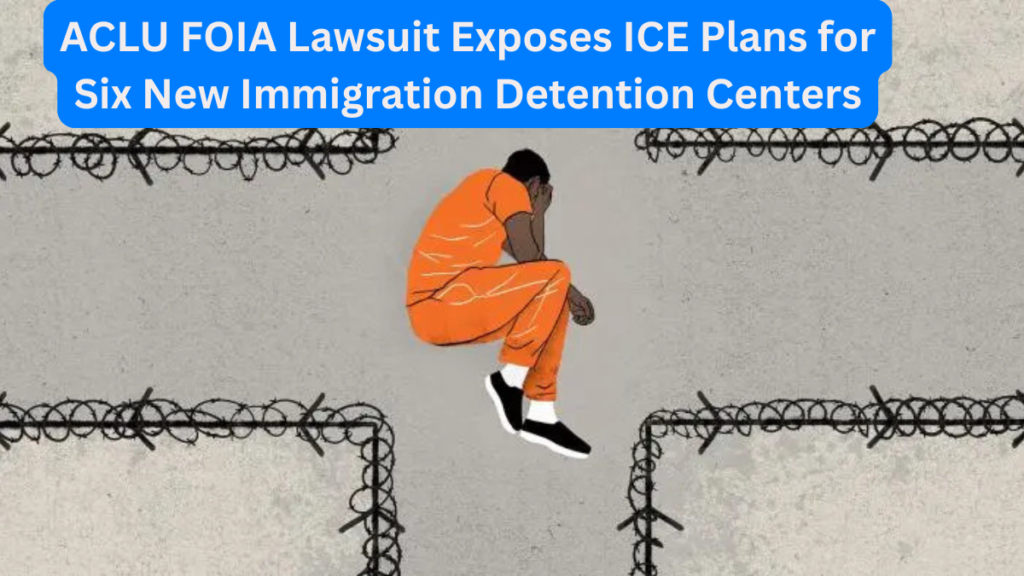
ACLU FOIA Lawsuit Exposes ICE Plans for Six New Immigration Detention Centers : Recent litigation by the American Civil Liberties Union (ACLU) has uncovered that U.S. Immigration and Customs Enforcement (ICE) is actively planning a significant expansion of its detention network. Through a Freedom of Information Act (FOIA) lawsuit, the ACLU obtained documents revealing ICE is considering opening six new immigration detention centers, including facilities with documented histories of abuse and corruption. This article provides a definitive guide to understanding these expansion plans, the role of private immigration detention facilities, the ongoing ACLU ICE lawsuit, and critical know-your-rights information.
How the ACLU’s FOIA Litigation Uncovered ICE’s Secret Expansion Plans
The drive for transparency in government operations led to this critical discovery. Here is a step-by-step breakdown of how the ACLU FOIA litigation revealed ICE’s activities.
The FOIA Request and Subsequent Lawsuit
The process began when the ACLU, along with its Virginia and North Carolina affiliates, sought public records to hold ICE accountable.
- Initial FOIA Request: In 2025, the ACLU submitted a formal FOIA request to ICE, seeking details on plans to expand detention capacity nationwide.
- Agency Non-Response: After ICE failed to comply with the legally mandated response timeline, the ACLU was forced to escalate.
- Filing of Federal Lawsuit: In October 2025, the ACLU filed a lawsuit against ICE to compel the release of documents.
- Document Disclosure: As a result of this litigation, ICE disclosed 98 pages of heavily redacted records, which nonetheless contained pivotal information about the proposed new ICE detention center locations.
What the Heavily Redacted Documents Reveal
The released documents, though incomplete, provide a disturbing glimpse into ICE’s methodology. They include:
- Evaluations of potential facility locations.
- Discussions with private operators for ICE detention contracts.
- Logistics information, such as proximity to hospitals and courts.
- Confirmation that ICE is actively considering reviving facilities with known records of human rights violations.
An In-Depth Look at the Six Proposed ICE Detention Facilities
The ACLU’s findings specifically identify several locations under consideration. This expansion underscores the growing reliance on private immigration detention facilities.
Identified Locations with Troubling Histories
| Proposed Facility Location | Managing Entity / History | Key Concerns & Past Violations |
|---|---|---|
| Augusta Correctional Center (Craigsville, VA) | Discussions with a private operator | History of sexual assault against detainees; officers convicted of smuggling drugs. |
| Rivers Correctional Facility (Winton, NC) | GEO Group, Inc. (Private Prison Corp.) | Lost federal contracts due to violence & sexual assault; officer contraband scandals. |
| Unnamed Facility (Greensboro, NC area) | Likely Baptiste Group | Previously a shuttered migrant children’s detention facility (2024). |
| Unnamed Facility (Unknown location) | HomelandsUSA | Company has publicly supported border wall construction. |
| Unnamed Facility (Harrisburg, PA area) | Baptiste Group | Details scarce due to redactions. |
| Unnamed “Base Camp” Facility (Undisclosed) | Unknown | Purpose and scale remain unclear from documents. |
The Dominant Role of Private Prison Corporations
A critical question the public asks is, “Are immigration detention centers privately owned?” The answer is complex. While ICE operates some facilities directly, a substantial portion of its detention network is run by for-profit companies through federal contracts.
- GEO Group and CoreCivic are the two largest private prison corporations holding ICE detention contracts.
- The documents show ICE is in active discussions with private operators for new facilities, indicating this privatized model is central to the expansion plan.
- Who built the current immigration detention centers? Often, they are converted existing structures (like the correctional centers listed) built by various entities, but operations and management are frequently privatized.
Critical Timelines, Public Impact, and Advocacy Updates
Staying informed on the status of this expansion and related policy fights requires attention to key dates and actions.
Important Dates and Deadlines to Monitor
- October 2025: ACLU files FOIA lawsuit against ICE.
- January 2026: Six deaths in ICE custody reported within the first three weeks of the year.
- February 2026 (Ongoing): ACLU releases documents to the public; advocacy and congressional scrutiny intensify.
- Future: ICE must decide on moving forward with Requests for Proposals (RFPs) and finalizing contracts for these facilities. Public comments periods may be announced.
The Human Cost: Abuse, Deaths, and Secrecy
The push for expansion occurs amid a severe crisis within existing detention centers.
- Six deaths in custody in early 2026 highlight acute safety failures.
- The selected facilities have prior records of sexual abuse, violence, and corruption.
- ICE’s reliance on secrecy, evidenced by heavily redacted documents, prevents meaningful public oversight and undermines accountability.
Know Your Rights: ACLU ICE Resources and Legal Guidance
In light of expanding enforcement, understanding your rights is paramount. The ACLU ICE Know Your Rights resources provide essential guidance for individuals and communities.
Step-by-Step: What to Do If Confronted by ICE
- Stay Calm and Silent: You have the right to remain silent. You can say, “I choose to remain silent.”
- Do Not Open the Door: If ICE agents are at your home, you do not have to open the door unless they present a warrant signed by a judge. Ask them to slip it under the door.
- Do Not Sign Anything: Do not sign any documents without first consulting with a lawyer.
- Record the Interaction: If safe to do so, record the encounter. Note officers’ badges and patrol car numbers.
- Contact an Attorney Immediately: You have the right to a lawyer. Call one as soon as possible.
- Report the Incident: Contact advocacy organizations like the ACLU to report the enforcement action.
How to Access Legal Support and Monitor Developments
- ACLU Immigrants’ Rights Project: Visit the ACLU’s national website for toolkits, red cards, and legal updates.
- Local ACLU Affiliates: The ACLU of Virginia and ACLU of North Carolina are deeply involved in this specific litigation and provide local resources.
- Community Organizations: Connect with local immigrant advocacy groups for support and know-your-rights training.
Frequently Asked Questions (FAQ)
Q1: Are immigration detention centers privately owned?
A1: Many are. ICE relies heavily on for-profit prison corporations like GEO Group and CoreCivic to manage detention facilities through federal contracts, as seen in the plans for the Rivers Correctional Facility.
Q2: Why is the ACLU suing ICE?
A2: The ACLU immigration lawsuit (a FOIA litigation) was filed to force ICE to release secret documents about its plans to expand detention capacity, arguing the public has a right to know how taxpayer dollars are being used and what the human rights impacts will be.
Q3: What is the current status of the six proposed new detention centers?
A3: Documents show they are in the active consideration and planning phase. ICE is evaluating sites and engaging with private operators. No final contracts have been announced, making ongoing public pressure critical.
Q4: How can I find out if a new detention center is planned for my community?
A4: Monitor local government meetings for agenda items about land use or federal contracts. File local and state-level FOIA requests. Follow the work of local ACLU affiliates and immigrant rights coalitions.
Q5: What are the main concerns with expanding immigration detention?
A5: Concerns include the documented history of abuse and death in custody, the use of taxpayer funds ($45+ billion allocated), the lack of transparency, and the prioritization of detention over community-based alternatives.
Q6: Where can I access the original documents released by the ACLU?
A6: The 98 pages of disclosed records are typically published on the ACLU’s official website, often within the press release or dedicated report section for this litigation.
Contact Information and Official Links
To learn more, take action, or seek legal help, use these authoritative resources.
- ACLU National Immigrants’ Rights Project:
- Website: www.aclu.org/issues/immigrants-rights
- Contact: Check website for media and legal intake contacts.
- ACLU of Virginia:
- Website: www.acluva.org
- Phone: (804) 644-8080
- ACLU of North Carolina:
- Website: www.acluofnorthcarolina.org
- Phone: (919) 834-3390
- ICE Freedom of Information Act Office:
- Website: www.ice.gov/foia
- National Immigration Justice Center (For Legal Referrals):
- Website: immigrantjustice.org